Most people assume that if they are injured in an Uber or Lyft, the rideshare company’s insurance handles everything. That assumption quickly disappears the moment you file a claim.
Uber and Lyft insurance coverage in Florida operates on a tiered system that shifts based on what the driver was doing with the app at the exact second of the crash. A driver waiting for a ping, a driver en route to a pickup, and a driver mid-trip with a passenger all trigger different policies with dramatically different limits. Understanding those tiers, and the gaps between them, is the difference between a covered claim and one that falls through the cracks. A Fort Lauderdale personal injury lawyer who handles rideshare claims can help identify which policy applies and protect your recovery from the start.
Key Takeaways for Uber and Lyft Insurance Coverage in Florida
- Florida law requires rideshare companies to maintain insurance for their drivers, but coverage limits range from $50,000 per person to $1 million depending on the driver’s app activity
- A driver’s personal auto policy typically excludes rideshare activity, creating a potential no-coverage zone when the app is on but no ride has been accepted
- The $1 million policy that most people associate with Uber and Lyft only applies once a ride has been accepted or a passenger is in the vehicle
- Contingent comprehensive and collision coverage for the driver’s vehicle requires the driver to already carry those coverages on their personal policy, and comes with a $2,500 deductible
- UM/UIM coverage through the TNC’s policy may be minimal or nonexistent even though Florida law references that coverage
The Three Phases of Rideshare Driver App Status Insurance
Florida’s rideshare insurance framework under Fla. Stat. § 627.748 does not provide a single policy that covers every situation. Instead, coverage shifts across distinct phases based on what the driver was doing with the Uber or Lyft app at the moment of the crash.
The tiered coverage structure, plus PIP benefits required under Florida’s no-fault insurance law and UM/UIM coverage, for Uber and Lyft accidents in Florida breaks down as follows:
| Driver Activity | Liability Coverage | PIP | UM/UIM | Vehicle Damage (Driver’s Car) |
| App Off | Driver’s personal policy only | Driver’s personal policy only | Driver’s personal policy only | Driver’s personal policy only |
| App On, Waiting for Request | $50,000/person, $100,000/incident, $25,000 property damage | Required under Florida no-fault minimums | Referenced by Florida law, but coverage may still be unavailable under the policy | None from TNC |
| Ride Accepted or Passenger in Vehicle | $1 million combined for death, bodily injury, and property damage | Required at limousine standard | Referenced by Florida law, but availability may vary under the policy | Contingent comp/collision with $2,500 deductible (only if driver carries personal comp/collision) |
Two details stand out from this framework. First, the jump from Phase One to Phase Two is enormous: coverage increases from $100,000 per incident to $1 million based solely on whether the driver tapped “accept” on a ride request. Second, Florida law references UM/UIM coverage in every tier. In practice, though, whether that coverage actually exists under the policy may be more complicated.
Where the Gaps in Uber Accident Insurance in Florida Appear
The waiting-for-a-request phase is where the gaps in Uber and Lyft accident insurance in Florida become most apparent, and where injured parties are most likely to be left exposed. The coverage limits are relatively low, and the interaction between the driver’s personal policy and the TNC’s policy creates friction that may delay or deny a claim entirely.
The Personal Policy Exclusion
Most personal auto insurance policies have exclusions for commercial rideshare activities. When a driver turns on the Uber or Lyft app, their personal insurer may deny any claim that arises during that period, even if no ride has been accepted, because the policy may consider the driver engaged in commercial activity the moment the app is active.
The TNC’s Role as Backstop
The TNC’s coverage during this phase is designed to catch claims that the driver’s personal insurer denies. Under Florida Statute § 627.748(e), the TNC’s policy does not need to wait for the driver’s personal insurer to deny the claim first. It must provide coverage from the first dollar.
However, disputes over which policy applies first may create delays. The driver’s personal insurer and the TNC’s commercial carrier each have an incentive to argue that the other should pay.
For an injured person waiting on medical bill coverage, that dispute translates directly into financial pressure.
No Vehicle Coverage for the Driver
If the accident happened during the waiting phase, the driver is generally out of luck for TNC-provided physical damage coverage for their car. Uber and Lyft do not offer comprehensive or collision coverage during this phase.
If the driver’s personal policy also excludes rideshare activity, the driver has no coverage for vehicle repairs at all. While this detail does not directly affect injured passengers or third parties, it illustrates the depth of the coverage gap during this phase.
What Contingent Liability Coverage Actually Means

The term “contingent” appears frequently in rideshare insurance, and it carries a specific meaning that affects what is actually covered.
Contingent Comprehensive and Collision Coverage
During the ride-accepted and passenger-in-vehicle phases, Uber and Lyft provide comprehensive and collision coverage for the driver’s vehicle, but only if the driver already carries those coverages on their personal auto policy.
Both Uber and Lyft offer contingent comprehensive and collision coverage with a $2,500 deductible.
Several conditions must be met before this coverage pays anything:
- The driver must carry comprehensive and collision on their personal auto policy at the time of the crash
- The accident must occur during the ride-accepted or passenger-in-vehicle phase, not during the waiting phase
- The driver must pay the $2,500 deductible out of pocket before the TNC’s coverage contributes
- The payout is capped at the actual cash value of the vehicle, not the replacement cost
Drivers who don’t have comprehensive and collision coverage on their personal policy get nothing from the TNC for their car’s damage. Many drivers who carry only liability coverage to save money discover this gap after a crash.
Why This Matters for Third-Party Claims
For passengers and other motorists, contingent liability coverage is less of a direct concern because the TNC’s $1 million liability policy covers injuries regardless of the driver’s personal coverage.
But the contingent structure does affect the rideshare driver’s financial stability, willingness to cooperate in a claim, and ability to return to work, all of which may indirectly influence how a case proceeds.
Filing a Third-Party Claim After a Rideshare Crash
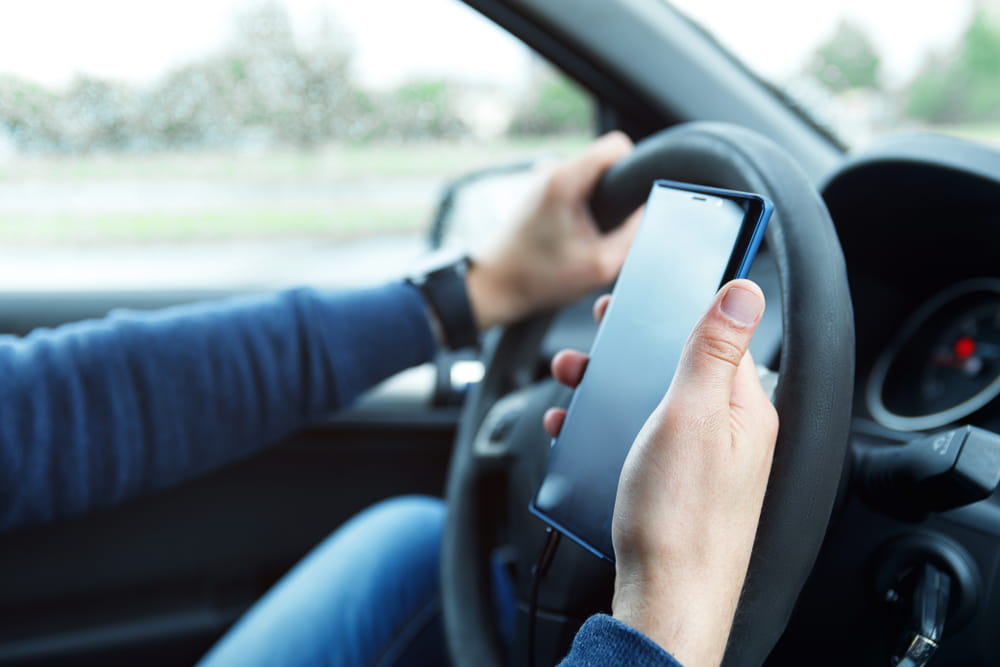
When another driver, a pedestrian, or a cyclist is injured by a rideshare driver’s negligence, the third-party claim process follows a different path than a standard car accident.
Confirming Which Policy Governs the Claim
The first step is confirming the rideshare driver’s app status, because that status determines which insurance policy governs the claim and what limits are available.
Uber and Lyft maintain timestamped records of when drivers log on, accept rides, begin trips, and complete drop-offs. In a claims coverage investigation, a TNC must immediately provide, upon request by a directly involved party, the precise times that the TNC driver logged on and off the digital network in the 12-hour period immediately preceding and following the accident.
Key data points that help establish the correct coverage tier include:
- The exact time the driver logged into the app
- Whether a ride request had been accepted before the crash occurred
- Whether a passenger was in the vehicle at the time of impact
- The time the driver last completed a trip, if the crash happened between rides
Without this information, insurers may dispute whether the $50,000/$100,000 waiting-phase limits or the $1 million ride-accepted limits govern the claim.
Dealing With Multiple Carriers
A third-party claim after a rideshare crash may involve several insurance companies, each conducting its own investigation and making its own coverage determination. The parties typically include:
- The rideshare driver’s personal auto insurer, which may deny the claim based on a commercial activity exclusion
- The TNC’s commercial carrier (typically Progressive for Uber, with varying carriers for Lyft), which may argue the driver was off-duty
- The injured person’s own UM/UIM provider, which may wait for the other two carriers to resolve their dispute before evaluating its own exposure
Each insurer is incentivized to shift the claim to another policy, and the person caught in the middle is the one with accumulating medical bills.
A rideshare accident attorney experienced in rideshare claims may cut through this cycle by securing the app data early, establishing which policy applies, and directing the claim to the correct carrier from the start.
When the $1 Million Policy Falls Short
The $1 million figure is the number most people associate with Uber and Lyft accident insurance coverage limits in Florida, but it may not stretch as far as expected in a catastrophic crash. When a single policy must cover several passengers with serious injuries, the per-person recovery shrinks.
Situations where the $1 million limit may prove insufficient include:
- Multi-passenger crashes where three or four injured riders are competing for the same policy
- Catastrophic injuries involving traumatic brain injury, spinal cord damage, or multiple surgeries with long-term rehabilitation needs
- Cases where both the rideshare passenger and a third-party motorist or pedestrian file claims against the same policy simultaneously
Florida law allows the injured party to pursue the at-fault driver’s personal assets beyond the policy limits, but most rideshare drivers do not carry significant personal assets. This is where the injured person’s own UM/UIM coverage, and the stacking rules under Florida law, may provide additional recovery that the TNC’s policy cannot.
FAQs About Florida Uber and Lyft Insurance Coverage
Does Uber’s insurance automatically cover my injuries after a crash?
Not automatically. Florida’s tiered coverage framework means that the policy in effect, and the limits available, change based on the driver’s activity in the app at the time of the collision. If the driver was offline, Uber’s insurance does not apply at all. If the driver was waiting for a request, limited coverage of $50,000/$100,000 applies. Only when a ride has been accepted, or a passenger is in the vehicle, does the $1 million policy activate.
What if the rideshare driver’s personal insurer denies my claim?
Under Florida law, the TNC’s policy does not need to wait for the personal insurer to deny the claim. It must provide coverage from the first dollar. In practice, disputes between the two carriers may still create delays. Securing the driver’s app data and establishing the correct coverage tier early helps resolve these disputes faster.
Can I recover compensation for vehicle damage if I was hit by an Uber or Lyft driver?
Yes. The TNC’s liability policy covers property damage to third parties based on the rideshare driver’s app status insurance tier: $25,000 during the waiting phase, and up to $1 million during the ride-accepted and passenger-in-vehicle phases. If your vehicle damage exceeds the available property damage coverage, you may need to pursue the driver personally or file through your own collision policy.
What is contingent comprehensive and collision coverage?
It is coverage that Uber and Lyft provide for the driver’s own vehicle during the ride-accepted and passenger-in-vehicle phases, but only if the driver already carries comprehensive and collision on their personal policy. Both companies apply a $2,500 deductible to this coverage. Drivers who carry only liability on their personal policies receive no vehicle damage coverage from the TNC.
Should I carry UM/UIM coverage even if I mostly ride as a passenger?
Yes. TNC companies frequently reject or minimize UM/UIM coverage on their commercial policies, which may leave passengers without adequate protection when a third-party driver causes the crash. Your own may step in under Fla. Stat. § 627.727 stacking rules, making it one of the most valuable coverages a frequent rideshare passenger may carry.

Personal Injury Attorney in Florida
The Policy That Applies Depends on the Second the Crash Happened
Rideshare insurance in Florida is not one policy. It is a shifting framework that changes with every tap on the driver’s phone. The difference between $50,000 in coverage and $1 million may come down to whether the driver accepted a ride request five seconds before or five seconds after the collision.
Our team at Your Insurance Attorney helps injured passengers, drivers, and third parties across Fort Lauderdale and South Florida determine exactly which policies apply and pursue every available dollar of coverage. Call 888-570-5677 for a free consultation.