Florida motorcycle PIP requirements work differently from what most riders expect, and that difference may leave you financially exposed after a crash in Fort Lauderdale or anywhere in Broward County.
While drivers of cars and trucks have automatic access to Personal Injury Protection (PIP) coverage for medical bills and lost wages regardless of fault, motorcyclists are excluded from that system entirely. The gap between what riders assume their insurance covers and what it actually pays is where financial trouble begins. A Fort Lauderdale personal injury lawyer can help riders understand what protections they actually have before a crash occurs.
Key Takeaways for Florida Motorcycle PIP Requirements
- Florida law excludes motorcycles from mandatory PIP coverage, meaning riders have no automatic no-fault insurance safety net after a crash
- Injured motorcyclists must prove another driver’s negligence before recovering medical expenses, unlike car accident victims, who file through their own PIP policy first
- Letters of protection may allow injured riders to receive medical treatment while a claim is pending, but Florida’s 2023 tort reform law added disclosure requirements that complicate their use
- Health insurance, MedPay, and uninsured/underinsured motorist coverage may fill portions of the gap, but each comes with its own limitations
- The two-year statute of limitations under Florida’s reformed negligence law makes early legal action critical for riders facing mounting medical debt
Why Florida’s No-Fault System Leaves Motorcyclists Behind
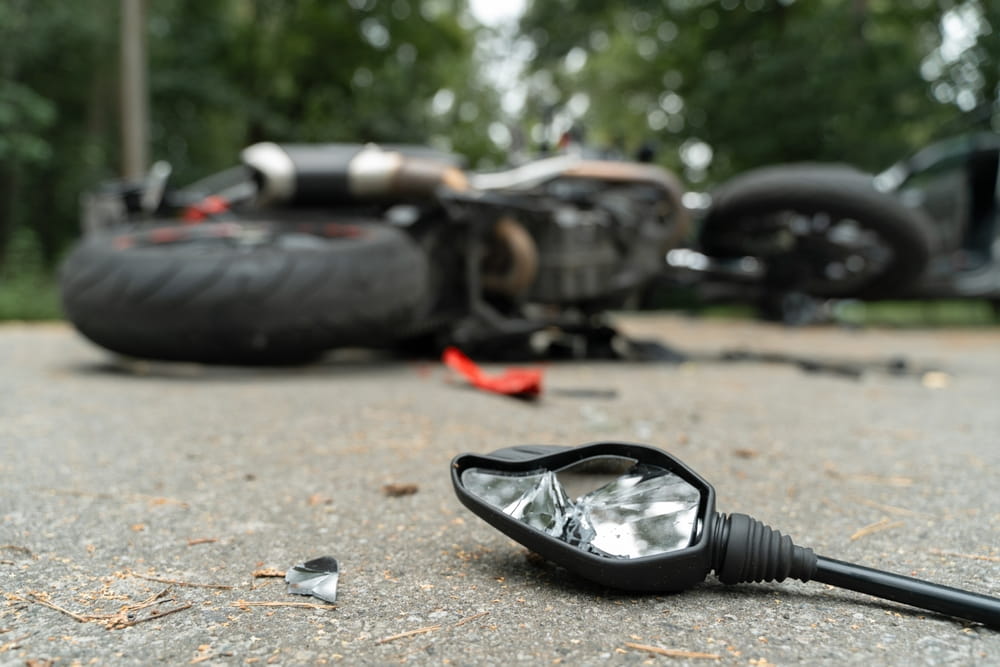
Florida operates under a no-fault insurance model for most motor vehicles. Drivers of cars and trucks carry PIP coverage, which pays up to $10,000 in medical expenses and lost wages after a crash, regardless of who caused it.
That coverage kicks in immediately, without any need to prove fault or wait for a liability determination.
However, Florida Statute 627.736 specifically excludes motorcycles from the PIP requirement, which changes everything about how riders pursue compensation after a crash. Instead of filing a quick claim through their own policy, injured motorcyclists usually must pursue a fault-based claim against the at-fault driver and any available liability coverage.
That process requires proving negligence, which takes time, evidence, and often legal representation.
The Medical Bill Crisis After a Fort Lauderdale Motorcycle Crash
Fort Lauderdale motorcycle accident injuries tend to be severe. Riders absorb the full force of a collision without the structural protection of an enclosed vehicle, and emergency medical costs reflect that reality.
How Costs Escalate Quickly
Trauma center visits, emergency surgery, diagnostic imaging, and follow-up appointments may generate tens of thousands of dollars in bills within the first few weeks alone. Unlike a fender bender that results in a sore neck, motorcycle crash injuries often require multiple providers and extended treatment timelines, each adding another layer of cost.
Where the Coverage Vacuum Appears
Without PIP to cover even a portion of those costs upfront, riders face a gap with no automatic backstop. Several factors make that gap worse:
- Health insurance may cover some expenses, but co-pays, deductibles, and network restrictions still leave significant out-of-pocket exposure
- Riders without health insurance have even fewer options for immediate relief
- Providers may delay or deny treatment without a clear payment source
- The at-fault driver’s insurer has no obligation to pay anything until liability is established
The at-fault driver’s insurance may eventually cover these costs, but “eventually” does not help when a hospital billing department is already sending collection notices. Medical bill recovery for bikers in Florida requires a strategy that bridges the gap between the crash and the resolution of the claim.
How Letters of Protection Help Injured Motorcyclists Get Treatment
Without PIP coverage to fund immediate medical care, injured riders need an alternative way to pay for treatment while a liability claim works its way through the system. A Letter of Protection, commonly called an LOP, is one of the most common tools for bridging that gap.
An LOP is a written agreement between an injured person, their lawyer, and a medical provider that allows the injured person to receive treatment without paying up front. The provider agrees to wait for payment until the case resolves, and the rider agrees to pay from any settlement or verdict.
In motorcycle accidents without PIP insurance, the injured rider may face challenges obtaining care without a letter of protection.
What Riders Need to Know Before Signing an LOP
LOPs provide access to care, but they come with tradeoffs that affect the final outcome of a claim. An LOP is usually arranged through an attorney, and the agreement ties payment to the eventual recovery.
Key details that shape how LOPs work in practice:
- Not every provider accepts LOPs, and some hospitals and surgical centers require payment or proof of insurance before treating
- Bills under an LOP may be five to eight times higher than Medicare rates, which reduces how much of a settlement the rider ultimately keeps
- If the case does not produce a recovery, the rider still owes the full amount
- The provider may sell the receivable to a third-party factoring company, adding complications at settlement
These tradeoffs make it important to discuss the terms of any LOP with an attorney before signing.
How Florida’s 2023 Tort Reform Complicated LOPs
Florida’s tort reform law, HB 837, changed the rules around letters of protection in ways that directly affect motorcycle accident claims.
The law now requires plaintiffs to disclose whether they were referred for treatment under an LOP and the identity of the person who made the referral. If the referral came from the plaintiff’s attorney, that disclosure is permitted and admissible at trial, notwithstanding attorney-client privilege.
The practical effect: defense attorneys may now use LOPs to imply that medical treatment was driven by financial motive rather than genuine injury. Referral patterns and financial relationships between law firms and providers are now fair game in discovery and at trial.
LOPs remain a valuable lifeline for riders who have no other way to pay for care. But under the current rules, how an LOP is structured and documented from day one matters far more than it did before 2023.
Filing a Third-Party Liability Claim After a Motorcycle Crash
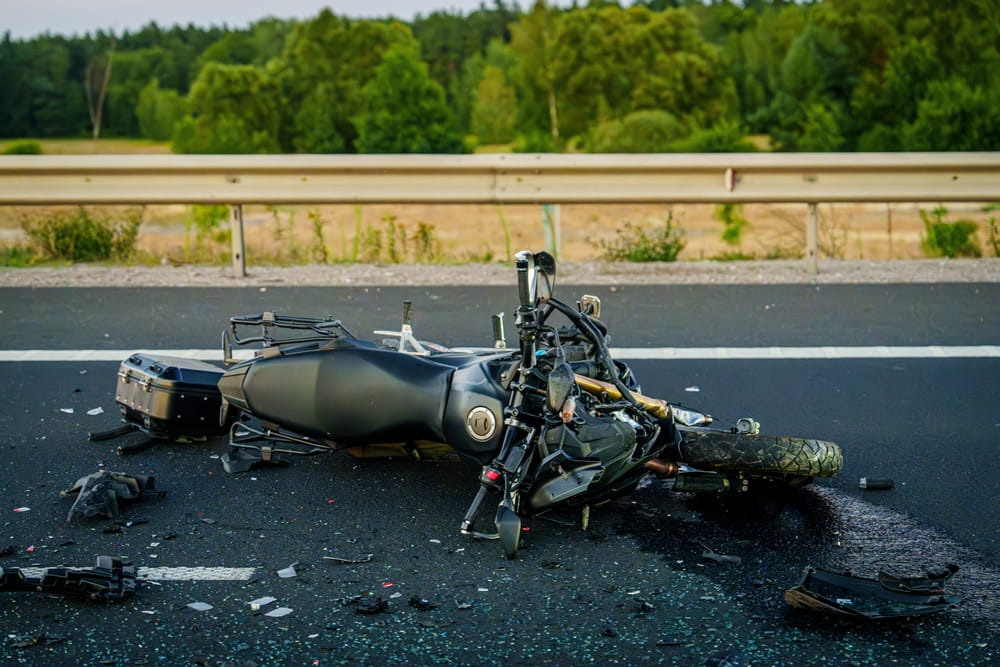
Because motorcyclists fall outside Florida’s no-fault system, suing for motorcycle injuries in Florida follows a different path than a typical car accident claim. Riders file directly against the at-fault driver’s bodily injury liability coverage, which means the entire claim hinges on proving negligence.
What a Third-Party Claim Requires
Building a successful liability claim after a motorcycle crash involves several elements working together:
- Evidence establishing the other driver’s negligence, including police reports, witness statements, traffic camera footage, and accident reconstruction when available
- Medical documentation connecting injuries to the crash, with consistent treatment records showing the full scope and duration of care
- Proof of financial losses, including medical bills, lost wages, reduced earning capacity, and out-of-pocket expenses
- Documentation of non-economic damages like pain and suffering, loss of enjoyment of life, and emotional distress
Each of these components takes time to develop, which creates tension with the immediate need for medical bill relief. This is why LOPs and early legal involvement are so closely linked in motorcycle accident cases.
The Comparative Fault Complication
Florida’s modified comparative fault system adds another variable. Under Fla. Stat. § 768.81, a rider found more than 50% at fault may be barred from recovering any damages. Even partial fault reduces the recovery proportionally.
Insurers handling motorcycle claims frequently attempt to shift blame to the rider, arguing speed, lane positioning, or lack of protective gear contributed to the injuries. In a system where fault percentage directly determines whether any compensation is available, the stakes of that argument are enormous.
Coverage Options That May Help Fill the Gap after a Fort Lauderdale Accident
The PIP exclusion does not mean motorcyclists are entirely without insurance options. Several types of coverage may help offset medical costs while a liability claim is pending.
Health Insurance
Private health insurance remains the most straightforward way to cover immediate medical expenses. However, health insurers that pay for accident-related treatment often assert a subrogation right, meaning they may seek reimbursement from any settlement proceeds. This reduces the net recovery available to the rider.
Medical Payments Coverage (MedPay)
MedPay is an optional add-on to a motorcycle insurance policy that covers medical expenses regardless of fault. It functions similarly to PIP in that it pays quickly and without a liability determination, but it is not required by Florida law, and many riders do not carry it.
For those who do, it provides a critical early source of funds for emergency treatment and follow-up care.
Uninsured/Underinsured Motorist Coverage (UM/UIM)
UM/UIM coverage protects riders when the at-fault driver has no insurance or insufficient coverage to pay for the damages. Florida has one of the worst uninsured motorist rates in the country, which makes this coverage particularly important for motorcyclists.
Like MedPay, UM/UIM is optional for motorcycle policies in Florida, but its value after a crash with an uninsured driver may be substantial.
How Subrogation Reduces What You Actually Keep

Even when health insurance covers motorcycle accident treatment, the financial picture at settlement may not be as favorable as riders expect. Most health insurance policies include a subrogation clause, which gives the insurer the right to recover what it paid for accident-related care from any settlement or verdict the rider receives.
How Subrogation Works in Motorcycle Accident Claims
After a crash, a rider’s health insurance may pay for emergency care, surgery, rehabilitation, and follow-up visits. Those payments provide critical short-term relief. But when the liability claim resolves, the health insurer may assert a lien against the settlement proceeds for every dollar it spent on accident-related treatment.
That lien gets paid before the rider sees any money. Combined with attorney fees, case costs, and any outstanding LOP balances, subrogation claims may significantly reduce the net recovery.
A simplified example of how settlement proceeds get divided:
- Attorney fees and case costs come off the top
- LOP balances owed to medical providers are paid next
- The health insurer’s subrogation lien is satisfied
- The rider receives what remains
For a motorcycle accident claim involving severe injuries, the gap between the gross settlement number and the check the rider actually deposits may be substantial.
Why This Matters More Without PIP
In a typical car accident case, PIP absorbs the first $10,000 in medical costs without subrogation complications. Motorcyclists do not have that buffer. Every dollar of medical treatment flows through either health insurance, LOPs, or out-of-pocket payment, and each of those channels carries its own claim against the settlement.
This layering effect is one of the least visible parts of the financial gap motorcycle riders face. A settlement that sounds adequate on paper may leave the rider with far less than expected after every lien, fee, and reimbursement is accounted for. An attorney familiar with subrogation negotiation may be able to reduce the health insurer’s lien, but that process requires planning well before settlement discussions begin.
FAQs About Florida Motorcycle PIP Requirements
Why does Florida exclude motorcycles from PIP coverage?
Florida’s PIP system was designed for quick, limited benefits tied to four-wheeled vehicles. The legislature chose to keep motorcycles in a fault-based system rather than extending no-fault coverage to them. The practical result is that riders must prove negligence before accessing the at-fault driver’s insurance.
Can I use my car’s PIP policy if I am injured on a motorcycle?
Generally, no. PIP coverage under a car insurance policy applies to the named insured and passengers of that vehicle. Florida Statute 627.736 specifically excludes motorcycles from the PIP requirement. However, policy language varies, and reviewing your specific coverage with an attorney may reveal exceptions worth exploring.
What happens if a medical provider refuses my Letter of Protection?
Not all providers accept LOPs. Hospitals, surgical centers, and some specialists may require payment or proof of insurance before proceeding with treatment. In those situations, health insurance, MedPay, or negotiated payment arrangements may be the only alternatives. An attorney familiar with letters of protection for motorcycle accidents may help identify providers willing to treat under an LOP.
Does wearing a helmet affect my ability to recover medical costs?
Riding without a helmet is legal in Florida for riders over 21 who carry the required medical benefits coverage under Fla. Stat. § 316.211. However, an insurer may argue that not wearing a helmet increased the severity of head or facial injuries, potentially reducing compensation through a comparative fault argument. Helmet use does not determine whether you may file a claim, but it may influence how damages are calculated.
How do I know which insurance coverage applies to my motorcycle accident?
The answer depends on multiple factors: your own motorcycle policy, whether you carry MedPay or UM/UIM coverage, whether you have health insurance, and the at-fault driver’s bodily injury liability limits. A motorcycle accident attorney may review all available policies and identify every potential source of recovery, which is especially important when PIP is off the table.

Personal Injury Attorney in Florida
Closing the Gap Between Medical Bills and Fair Compensation
Most Florida riders do not discover the PIP gap until they are already dealing with emergency room bills, follow-up appointments, and an insurance company that is in no hurry to pay. That gap between what you need now and what the legal process delivers later is where financial strain becomes overwhelming.
Our team at Your Insurance Attorney helps injured motorcyclists in Fort Lauderdale and across South Florida navigate this exact problem, from identifying every available coverage source to structuring LOPs and filing third-party claims that account for the full scope of injuries and financial losses. Consultations are free, and we handle motorcycle accident cases on a contingency fee basis.