Trucking company liability in Florida extends far beyond the driver behind the wheel. When a commercial truck causes a crash, the investigation can reveal that corporate decisions, maintenance failures, hiring shortcuts, and cargo loading errors contributed to the collision just as much as the driver’s actions on the road.
The trucking company, its maintenance contractors, cargo loaders, and freight brokers each carry separate insurance policies. Identifying every responsible party increases the total compensation available with help from a personal injury lawyer.
Key Takeaways for Trucking Company Liability in Florida
- Trucking companies face direct liability for their own negligence in hiring, training, supervising, and maintaining vehicles, separate from the driver’s fault
- Employer responsibility for a truck crash may apply when drivers cause accidents while operating within the scope of their employment
- Maintenance contractors, cargo shippers, and freight brokers may each bear independent liability depending on their role in the chain of events
- Federal FMCSA regulations establish the safety standards that trucking companies must follow, and violations serve as evidence of negligence
- Pursuing claims against multiple defendants increases available insurance coverage and strengthens your negotiating position against each party
Why the Driver Is Rarely the Only Responsible Party in Truck Crashes
After a car accident, liability usually falls on one or two drivers. Truck accidents work differently. Commercial trucking involves a chain of companies and individuals who each control different aspects of the operation, from hiring the driver to loading the cargo to maintaining the brakes.
When any link in that chain fails, the crash that results may generate liability for multiple parties. A fatigued driver who ran a red light may have been pressured by a carrier to skip rest breaks. The brakes that failed may have been serviced by a third-party contractor who cut corners. The cargo that shifted and caused a rollover may have been loaded by a warehouse crew with no securement training.
Each failure represents a separate source of negligence, and each negligent party carries its own insurance. This is why truck accident claims frequently name multiple defendants rather than just the driver.
How Trucking Companies Create Their Own Liability
Trucking companies face liability not only for their drivers’ actions but for their own corporate decisions. These claims target the company directly, independent of whether the driver was also negligent.
Negligent Hiring and Retention
Motor carriers must screen drivers before putting them on the road. FMCSA regulations require carriers to verify CDL qualifications, review driving history, check for prior safety violations, and conduct pre-employment drug and alcohol testing. Driver qualification files maintained by the carrier document whether this screening occurred.
Claims about negligent hiring by a trucking company argue that the carrier failed to conduct adequate screening and hired a driver who posed a foreseeable safety risk. Common failures include:
- Hiring drivers with suspended or revoked commercial licenses
- Overlooking multiple moving violations or prior at-fault crashes on a driver’s record
- Failing to verify prior DUI or DWI convictions
- Skipping pre-employment drug and alcohol testing or ignoring failed results from previous employers
- Not contacting prior employers to review the driver’s safety history as required by federal regulations
Negligent retention applies when a carrier keeps a driver on the road despite evidence of dangerous behavior. A driver who accumulates safety violations, fails post-accident drug tests, or receives complaints about aggressive driving creates ongoing liability for the company that continues to employ them.
Hours-of-Service Pressure and Driver Fatigue
Federal hours-of-service rules limit driving time to prevent fatigue-related crashes. For many property-carrying drivers, hours-of-service rules generally limit driving to about 11 hours after 10 hours off duty and require rest breaks, though the exact rules can vary by operation and exceptions.
Trucking companies create liability when they establish delivery schedules that are impossible to meet without violating these limits. Dispatchers who assign unrealistic routes, penalize drivers for late deliveries, or incentivize speed over safety share responsibility for fatigue-related crashes.
Electronic logging devices (ELDs) automatically record driving hours, making it harder for drivers to falsify logbooks. However, some carriers pressure drivers to drive “off the clock” or use a second, unregistered device. Driver logbook violations and ELD tampering create strong evidence of corporate negligence.
Inadequate Training and Supervision
Carriers must train drivers on vehicle operation, cargo securement, defensive driving, and emergency procedures. When a company puts an undertrained driver on Fort Lauderdale’s congested highways, and that driver causes a crash through inexperience or poor technique, the company’s failure to train becomes a basis for liability.
Supervision failures include allowing drivers to operate vehicles they are not qualified to drive, failing to monitor ELD compliance, and ignoring patterns of unsafe driving behavior revealed through telematics data.
Fleet Maintenance Failures
Trucking companies bear responsibility for maintaining their vehicles in a safe operating condition. Federal regulations require systematic inspection, repair, and maintenance programs with documented records for every vehicle in the fleet.
When a company defers brake repairs to keep a truck in service, skips required inspections to save money, or ignores driver reports of mechanical problems, the resulting equipment failures create direct corporate liability. Maintenance records, inspection reports, and driver vehicle inspection reports (DVIRs) reveal whether the company met its obligations.
When Maintenance Contractors Share the Blame
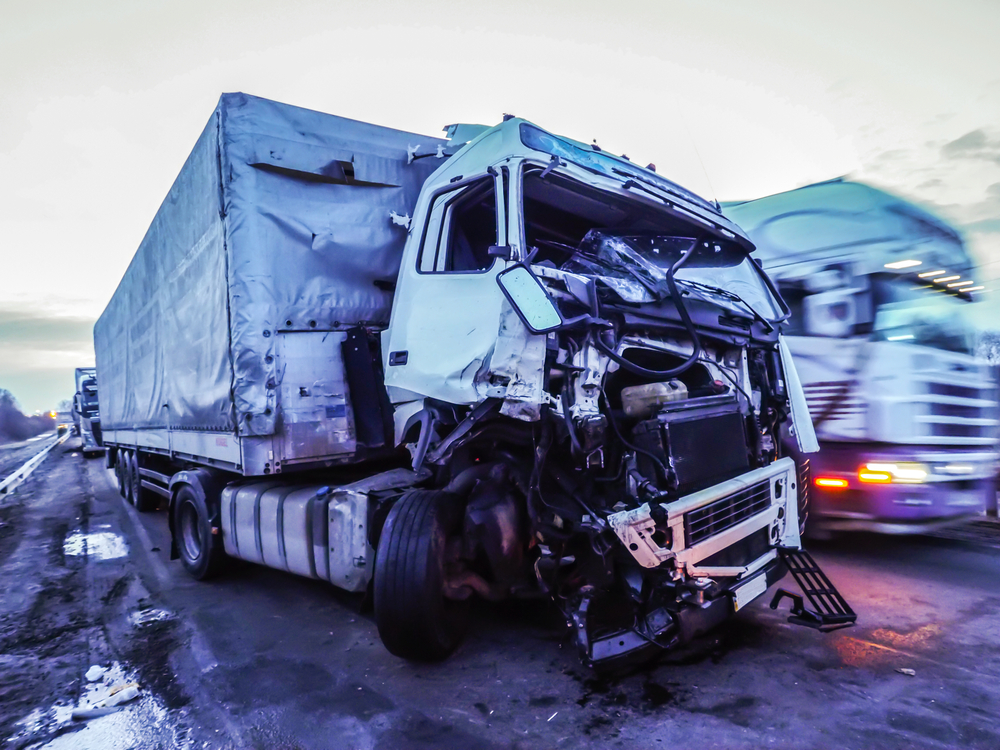
Many trucking companies outsource vehicle maintenance to third-party shops. This arrangement does not eliminate the carrier’s maintenance obligations, but it does create an additional liable party when maintenance failures cause crashes.
How Third-Party Maintenance Liability Works
A maintenance contractor who performs brake work, tire service, or other safety-critical repairs assumes responsibility for the quality of that work. If a contractor installs brake pads incorrectly, fails to identify a cracked tire during inspection, or signs off on a repair that was never completed, that contractor faces independent liability for crashes caused by the defective work.
Commercial vehicle maintenance violations in Florida generate liability for both the contractor who performed the faulty work and the carrier who failed to verify the repair through post-maintenance inspection. This dual liability often provides injured parties with access to two separate insurance policies.
Evidence That Proves Maintenance Negligence
Maintenance negligence claims rely on documentary evidence:
- Maintenance and repair records showing what work was performed and when
- Pre-trip and post-trip driver vehicle inspection reports documenting mechanical complaints
- FMCSA inspection results identifying prior mechanical violations
- The carrier’s systematic maintenance schedule compared against actual service dates
- When needed, expert analysis of failed components linking the failure to improper maintenance
This evidence establishes whether the contractor performed the work competently and whether the carrier maintained adequate oversight of its maintenance program.
When Cargo Shippers and Loaders Bear Responsibility
Cargo-related crashes, including rollovers, jackknife accidents, and spilled-load incidents, often trace back to loading errors rather than driver mistakes. The parties responsible for loading and securing freight may face liability when their failures contribute to a crash.
Overloading and Weight Distribution Errors
Federal and state regulations set maximum weight limits for commercial vehicles. Cargo that exceeds these limits stresses brakes, tires, and suspension components beyond their design capacity. Improper weight distribution shifts the truck’s center of gravity, making rollovers and loss-of-control crashes more likely during turns, lane changes, and emergency maneuvers.
Liability for overloading depends on who controlled the loading process. Shippers who load their own trailers bear direct responsibility. When carriers accept loads they know exceed weight limits, the carrier shares liability. Weigh station records and cargo manifests document whether weight limits were exceeded.
Cargo Securement Failures
Unsecured or poorly secured cargo shifts during transit, creating sudden weight imbalances that cause drivers to lose control. Cargo that breaks free can spill onto roadways, creating hazards for surrounding vehicles. FMCSA cargo securement regulations specify tiedown requirements based on cargo type and weight.
The party responsible for securing the load, whether the shipper, the driver, or a third-party loading crew, faces liability when securement failures contribute to a crash. Photographic evidence from the crash scene, cargo manifests, and securement equipment inspection help establish which party failed to secure the freight properly.
When Freight Brokers Could Face Liability

Freight brokers arrange transportation between shippers and carriers without operating trucks themselves. Despite this intermediary role, brokers may face liability in limited situations when they select carriers with known safety deficiencies.
A broker who arranges a load with a carrier that has a poor FMCSA safety rating, a history of violations, or inadequate insurance coverage may be considered negligent in its carrier selection. This liability theory has gained traction in recent years as courts have recognized that brokers play a meaningful role in determining which carriers operate on public roads.
Broker liability claims require evidence that the broker knew or should have known about the carrier’s safety problems. Some FMCSA safety information and inspection history is publicly available, and it can be used to evaluate what a broker knew or should have known about a carrier.
How Multiple Defendants Could Strengthen Your Injury Claim
Naming multiple defendants in a truck crash claim serves both strategic and practical purposes. Each responsible party carries its own insurance, and pursuing claims against all of them changes the dynamics of your case in important ways:
- Access to more insurance coverage — A carrier may hold a $1 million commercial auto policy, a maintenance contractor may carry separate general liability coverage, and a freight broker may carry contingent liability insurance. Pursuing all responsible parties increases the total pool of available compensation, which matters significantly when catastrophic injury damages exceed any single policy’s limits.
- Leverage in settlement negotiations — Multiple defendants create pressure that single-defendant cases do not. Each insurer monitors what the others are doing. When one insurer sees strong evidence against a co-defendant, it may settle earlier to limit its own exposure. This dynamic often produces faster, more favorable resolutions.
- Protection against insufficient coverage — If you pursue only the driver and the driver’s insurance proves inadequate, you may recover far less than your damages warrant. Identifying every liable party creates multiple sources of recovery and protects against this outcome.
The more thoroughly your attorney investigates the chain of responsibility, the stronger your position becomes against each individual defendant.
FAQs for Trucking Company Liability in Florida
Can I Sue the Trucking Company if the Driver Was an Independent Contractor?
Trucking companies sometimes classify drivers as independent contractors to avoid liability. However, courts look at the actual level of control the company exercises over the driver, including setting routes, schedules, and work requirements. Additionally, FMCSA rules place safety responsibilities on motor carriers, and courts may still hold a carrier responsible depending on the facts, even when a driver is labeled an independent contractor.
How Do I Prove the Trucking Company Was Negligent?
Evidence comes primarily from the company’s own records: driver qualification files, ELD data, maintenance logs, dispatch communications, safety audits, and training documentation. An attorney subpoenas these records early and sends preservation demands to prevent the company from destroying or altering evidence.
What If the Trucking Company Destroyed Evidence After the Crash?
Spoliation of evidence, meaning the intentional destruction of relevant records, can result in court sanctions against the trucking company. These sanctions may include adverse inference instructions that allow the jury to assume the destroyed evidence was unfavorable to the company. This is one reason why early legal involvement and prompt preservation demands are critical.
Does the Trucking Company’s Insurance Cover My Claim?
Commercial motor carriers must meet federal minimum financial responsibility requirements that vary by the type of operation and cargo, and many carriers carry $1 million or more in liability coverage. This coverage responds to claims arising from the carrier’s negligence, its drivers’ actions within the scope of employment, and, in some cases, the carrier’s failure to maintain vehicles properly.
How Long Do I Have to File a Claim Against a Trucking Company in Florida?
Florida generally imposes a two-year statute of limitations for personal injury claims and two years for wrongful death claims. However, trucking evidence degrades or disappears quickly, so contacting an attorney within days of the crash protects both your legal rights and the evidence needed to prove the company’s liability.
The Corporate Paper Trail Could Tell the Real Story

Truck crashes don’t just happen because of one bad decision by one driver on one day. They can also happen because companies cut maintenance budgets, dispatchers assign impossible schedules, contractors skip inspections, and loaders ignore weight limits. The driver’s mistake might be the last failure in a long chain of corporate negligence.
Your Insurance Attorney traces that chain from the crash scene back to the boardroom. We obtain the records that trucking companies prefer to keep hidden, identify every party that contributed to your injuries, and pursue claims against each one.
Contact our Fort Lauderdale truck accident lawyers for a free consultation.